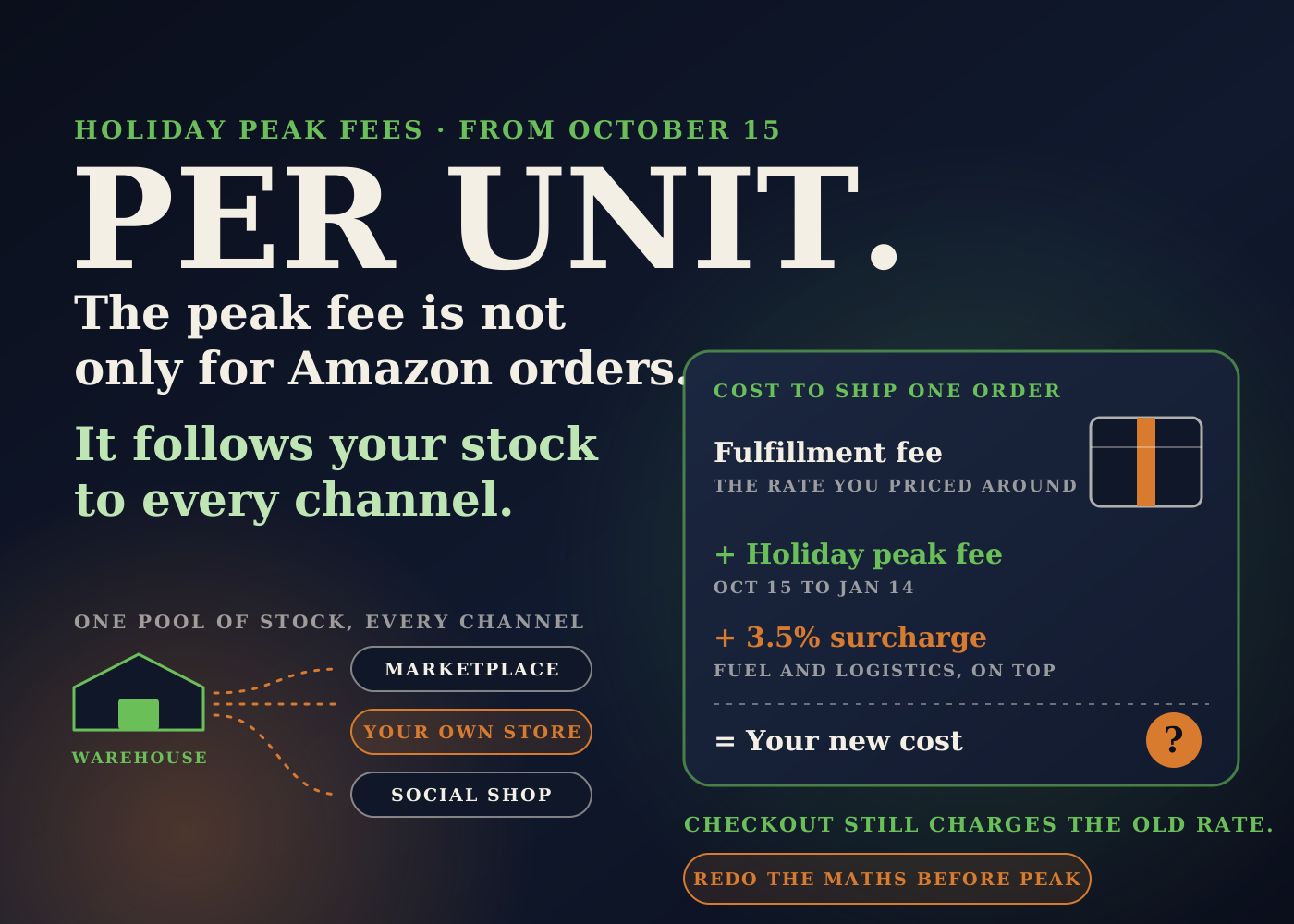
Amazon's holiday peak fulfillment fees start on October 15. Most people file that under "Amazon seller news" and move on.
But the fee is not limited to orders placed on Amazon. It also covers Multi-Channel Fulfillment and Buy with Prime, which is how a lot of Shopify brands ship their own site's orders out of Amazon's warehouses.
If any of your Shopify, TikTok Shop or wholesale orders leave from Amazon stock, your cost per order changes this week. Here is what Amazon has said, and what I'd check before Thursday.
Table of contents
What changes on October 15
Amazon's holiday announcement in the Seller Forums says the peak fulfillment fee runs from October 15, 2026 to January 14, 2027. Those are the same dates as last year.
It applies to four programs: Fulfillment by Amazon, Remote Fulfillment with FBA, Multi-Channel Fulfillment and Buy with Prime.
Amazon says the per-unit increase over non-peak rates is the same as last year, averaging $0.32 per unit.
There is a second layer. A 3.5% fuel and logistics-related surcharge applies on top of the peak fee. Amazon's Multi-Channel Fulfillment pricing page confirms that surcharge applies to MCF fulfillment fees in the US.
One caveat. The MCF pricing page does not list the peak amounts itself. It says the per-unit increases match last year's and points to the rate card. So the $0.32 is Amazon's stated average, not your number. Yours depends on size tier.
Why this reaches your Shopify orders
Multi-Channel Fulfillment is Amazon picking, packing and shipping orders that were placed somewhere else. Your own store, a marketplace, a social shop.
The appeal is one pool of inventory serving every channel. I covered the trade-offs of that setup in the backend work nobody budgets for.
The cost side is where this week matters. The customer on your own site usually pays a shipping rate you set months ago. When the fulfillment fee goes up, the difference comes straight out of margin.
My read: a small per-unit increase is easy to wave off on a single-item order. It is harder to wave off on low-priced items, on free-shipping thresholds, and on anything you plan to discount for Black Friday.
What I'd check this week
1. Which orders actually ship from Amazon
List every channel that routes to MCF or Buy with Prime. Brands often know the main one and forget the second, such as a wholesale replacement flow or a TikTok Shop connection set up last spring.
2. Your real per-order cost for the top sellers
Take your ten best-selling SKUs. Look up the peak rate for each size tier on Amazon's rate card, add the 3.5% surcharge, and write the new cost next to the old one.
Do it for the order shapes you actually ship, not just single units. Amazon's MCF pricing page says volume-based discounts can reduce per-unit fulfillment fees by up to 50% for multi-unit orders, so a two-item order is not simply double.
3. What checkout charges for shipping
Compare the new cost with what the customer pays. If you offer free shipping over a threshold, check that the threshold still covers the fee at peak rates.
This is the same exercise I suggested when USPS holiday pricing went live. If you use both, do both sums in one sitting.
4. Your holiday promotions
Run the planned Black Friday discount through the new cost. A discount that was fine in September can leave very little once the peak fee and the surcharge are in.
5. The inbound deadlines
The same announcement lists arrival deadlines for stock to be Prime-badge eligible for Black Friday Week and Cyber Monday. October 14 for shipments through Amazon Warehousing and Distribution. October 21 for FBA shipments with minimal shipment splits. October 28 for FBA shipments with Amazon-optimized splits.
Amazon also recommends sending inventory early because capacity may be lower during the holiday season.
Those deadlines are written for Amazon's own events. But if your Shopify orders draw from the same stock, a late inbound shipment is a stockout on your site too. I'd check each SKU's days of cover against those dates, using the method in the low-stock alert I'd build in a Google Sheet.
6. Whether some orders should ship from somewhere else
If you also have a 3PL or ship in-house, price the same order both ways for the peak period. The answer may be different for October to January than it was in summer.
I would not move everything on the strength of one fee. Splitting stock has its own costs. But it is worth knowing the number before peak, not after.
The bigger picture: fulfillment cost is seasonal now
Carriers and fulfillment networks all price peak separately. USPS did it on October 4. Amazon does it on October 15.
That means a brand's cost per order is not one number for the year. It is at least two, and the higher one applies in the weeks when volume is highest and discounts are deepest.
The brands that handle this well are not doing anything clever. They keep a simple cost sheet per SKU, update it when a rate changes, and check promotions against it before they go live.
It is the kind of small, boring routine that sits inside a proper operations setup. Someone owns the cost sheet. Someone checks it before peak.
Pre-peak checklist
- List every sales channel that ships through Multi-Channel Fulfillment or Buy with Prime.
- Pull Amazon's current rate card and note the peak rate for each of your size tiers.
- Add the 3.5% fuel and logistics-related surcharge on top.
- Recalculate cost per order for your top ten SKUs, for single-unit and multi-unit orders.
- Compare the new cost with the shipping rate and free-shipping threshold at checkout.
- Run every planned holiday discount through the new numbers.
- Check inbound shipments against the October 14, 21 and 28 arrival deadlines.
- Check days of cover for each SKU held at Amazon through to mid-January.
- If you have a second fulfillment option, price your most common order both ways for the peak period.
- Put January 15 in the calendar to switch your cost sheet back to non-peak rates.
None of this takes long. It is an hour with a rate card and a spreadsheet, and it is better done before the fee starts than after the first peak invoice.
Source: Amazon Seller Forums, "Holiday 2026: Same fees, same eligibility, earlier deadlines", posted by Amazon's news account in summer 2026, and Amazon Multi-Channel Fulfillment pricing page, checked October 13, 2026. The checks and the margin read are my own operator view.
Frequently asked questions
When do Amazon's holiday peak fulfillment fees apply?
From October 15, 2026 to January 14, 2027, according to Amazon's holiday announcement. Amazon says those are the same dates as last year.
Do the peak fees apply to orders from my Shopify store?
They do if those orders are fulfilled through Multi-Channel Fulfillment or Buy with Prime. Amazon lists both programs alongside FBA and Remote Fulfillment with FBA.
How much is the increase?
Amazon says the per-unit increase is the same as last year, averaging $0.32 per unit, with a 3.5% fuel and logistics-related surcharge on top. The exact amount depends on size tier, so check the rate card for your own products.
What are the inbound deadlines for Black Friday and Cyber Monday?
For Prime-badge eligibility, Amazon lists October 14 for Amazon Warehousing and Distribution shipments, October 21 for FBA shipments with minimal shipment splits, and October 28 for FBA shipments with Amazon-optimized splits.