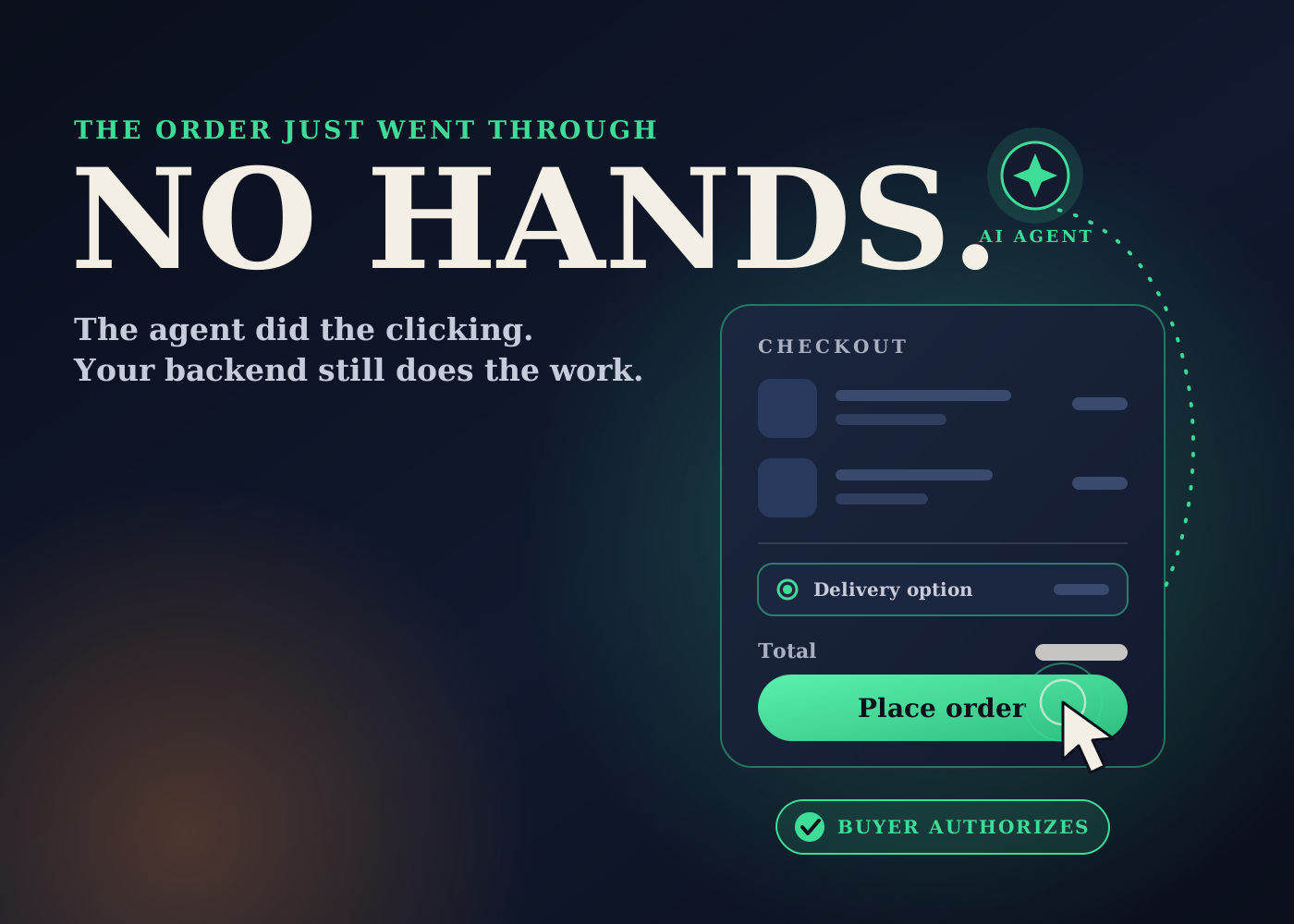
On September 28, Shopify opened checkout to browser-based AI agents. Until now, an agent could browse your store and add things to a cart. Now it can finish the purchase too.
That is a big shift for the front of the store. It is a bigger one for the backend, because every weak spot in your operations now gets hit faster and with less human hesitation.
Here is what was actually announced, where I would expect it to show up in your operations first, and what I would check this week.
Table of contents
What Shopify actually shipped
Shopify extended its WebMCP support so a browser-based AI agent can complete a purchase, not just search and add to cart.
There are three new tools: get_checkout, update_checkout, and complete_checkout. Between them, an agent can read the checkout screen, change details like the address or delivery option, and submit the order.
The key condition: the order is submitted only with the buyer's authorization. The human still approves the purchase.
Shopify is rolling this out to eligible merchants, and Meta's Muse agent and a newer agent called Instinct are named partners. Amazon, by contrast, currently blocks AI agents from buying on a user's behalf.
The coverage I read does not describe any step a merchant has to take to switch this on. So the practical question is not "how do I enable it" but "what happens to my operations when it arrives."
Where your backend feels it first
Nothing below is a Shopify claim. This is my read, from running store backends, on where agent-driven orders will put pressure.
Inventory accuracy stops being forgiving
A human shopper hesitates, gets distracted, comes back tomorrow. An agent compares options and buys in seconds.
If your on-hand number is off, you find out through an oversell, a refund, and an apology email. The faster the buying, the faster the drift hurts.
Delivery options get read literally
An agent can change the delivery option at checkout. If your shipping setup is confusing, overlapping, or has an option you would rather nobody picked, assume something will pick it.
Clean, intentional rates matter more when the chooser is a machine optimizing for what the buyer asked for.
Product data becomes the sales pitch
An agent leans on titles, variants, and policies far more than on your brand photography. Vague variant names or a return policy buried in an image create wrong orders.
Wrong orders turn into returns, and returns are where margin quietly leaks.
Support needs to see where the order came from
When a customer says "I didn't mean to order that," support needs context fast. Check how these orders appear in your admin before assuming you can tell them apart from normal ones.
The bigger picture: speed exposes what was already loose
I wrote recently about where AI genuinely helps the backend and where it doesn't. This is the other side of that coin: AI on the buyer's side now raises the bar for your operations.
The same lesson from adding a new sales channel applies. A new way to buy is a new source of volume, and volume multiplies whatever was already shaky.
Stores with clean inventory, clear rates, and tidy product data will quietly benefit. Stores without them will find out the hard way, and at machine speed.
What I'd check on your own store this week
- Compare Shopify's on-hand count for your top 10 sellers against a physical count. Fix the gap before faster buying finds it for you.
- Open your shipping settings and read every delivery option as if you were a machine choosing the cheapest valid one. Remove anything you would not honor.
- Read the titles and variant names on your best sellers out loud. If a stranger could order the wrong size or version, rename it.
- Make sure your return and shipping policies exist as plain text on the page, not only inside an image.
- Open a recent order in your admin and note exactly what source and channel information it shows, so support knows what they can and cannot see.
None of this needs a new app. It is the same operational hygiene that keeps any store healthy, just with less time to get away with skipping it.
Source: TechCrunch, September 28, 2026.
Frequently asked questions
Do I need to turn this on?
The reporting does not describe any merchant setup step. It says the capability is rolling out to eligible Shopify merchants. Check your own admin and Shopify's changelog for how it applies to your store.
Can an AI agent buy something without the customer's approval?
According to the announcement, no. Agents can submit the order only with the buyer's authorization. The human is still the one approving the purchase.
Does this mean AI agents will take over my store's traffic?
It is far too early to say that. I treat it as one more way customers may arrive, and the right response is to make sure the operations underneath can handle it.
What's the single best thing to fix first?
Inventory accuracy on your top sellers. It is the fastest check, and faster buying makes every miscount more expensive.