I use ChatGPT and Claude most working days — not as a novelty, but as part of how I actually run Shopify backends for clients. So I get asked a version of the same question a lot: is AI actually changing ecommerce operations, or is it another wave of tools that sound impressive in a demo and add nothing to a real store's day-to-day?
The honest answer is both, depending on exactly where you point it. Here's where it earns its place in my workflow, and where I still don't trust it.
Table of contents
Where it genuinely saves time: drafting, not deciding
The clearest win is first drafts. A support macro for a common refund scenario, a first pass at a product description, an SOP for a process I've done a dozen times but never written down — AI gets me from a blank page to something 70% finished in a fraction of the time.
I still read every line and edit it before it goes anywhere near a customer or a client. The value isn't "AI decided this." It's "AI removed the blank-page tax," which is a real, meaningful time save without asking me to trust its judgment on anything that matters.
Reconciliation is still a human job
Matching Shopify's inventory numbers against a physical count, tracing a return back to the right order, or figuring out why a payout doesn't match expected revenue — I don't hand this to AI, and I'd be cautious of anyone who does without close supervision.
These tasks need someone who understands the actual business context behind a discrepancy, not just pattern-matching against the numbers in front of it. An AI tool confidently producing a wrong reconciliation is worse than it refusing to try, because the confidence is what gets it trusted.
AI-written customer replies need a human filter, always
AI is decent at drafting a support reply that's grammatically clean and on-topic. It's much less reliable at knowing when a customer needs more warmth than the words on the screen suggest, or when a seemingly small complaint is actually the third message from someone about to leave a bad review.
I use it to draft the boring, high-volume replies — order status, standard policy questions — and I still personally handle anything with real relationship risk attached. The brand's voice and judgment calls stay human.
It's genuinely good at spotting patterns across support and return data
This is the underrated use case. Feed a few dozen return reasons or support tickets into a good AI tool and ask it to group and summarize them, and it's fast and surprisingly accurate at surfacing a pattern a person skimming a spreadsheet might miss — a size that keeps running small, a shipping delay concentrated at one fulfillment center, a policy question that keeps coming up because a page isn't clear.
It's not replacing the analysis; it's making the first pass of it much faster, which means I actually do this kind of review more often than I would manually.
The "AI store operator" pitch you're seeing everywhere is mostly hype
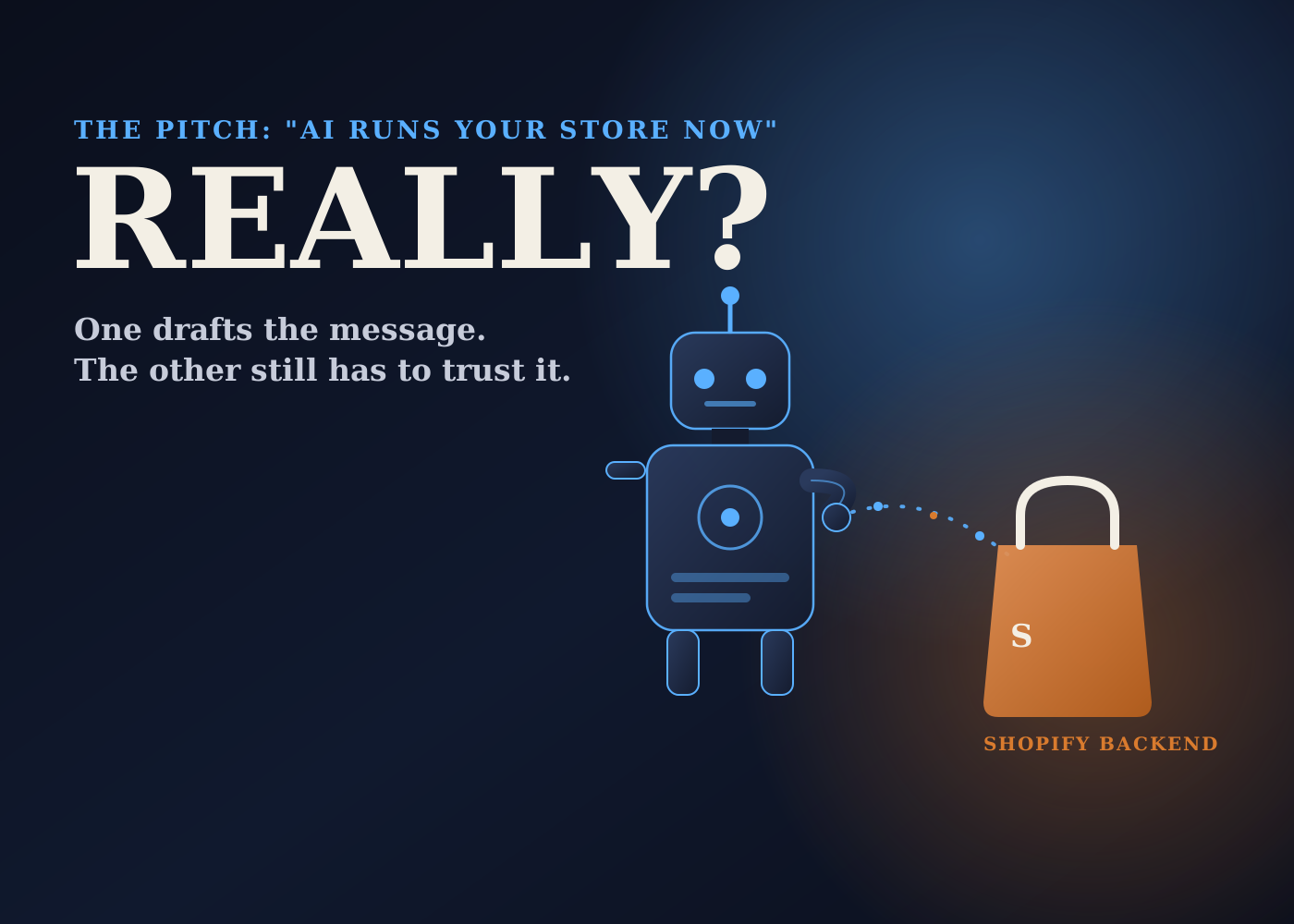
There's a growing pitch, especially aimed at solo founders, that AI can now more or less run your store's operations end to end — inventory decisions, supplier communication, pricing, support, all of it, autonomously. I'd treat that claim skeptically.
The tools are genuinely useful assistants inside a process a person still owns and checks. They are not yet a substitute for someone who understands your specific supplier relationships, your specific customers, and what "normal" looks like for your specific store well enough to notice when something's wrong.
The gap between "helpful assistant" and "autonomous operator" is still wide, and the businesses I see get hurt are the ones that acted like it had already closed.
How I'd start using AI in your own backend, without the risk
- Start with drafting tasks only — support macros, product copy, SOP first drafts — where a human reviews the output before it reaches a customer or a decision.
- Never let an AI tool make an unsupervised change to inventory counts, pricing, or anything that touches money without a person checking it first.
- Use it to summarize and group messy data (returns, tickets, reviews) rather than to make the call on what to do about what it finds.
- Keep a running note of where it's been wrong or overconfident — that list tells you exactly which tasks to keep it away from.
- Be skeptical of any tool or pitch that promises "hands-off" store operations — the businesses doing this well still have a person who owns the outcome.
AI hasn't replaced any part of the operational discipline that actually keeps a store running well — it's made the parts I was already doing faster. That's a real, useful shift. It's just a smaller and more specific one than the current hype suggests.
Frequently asked questions
Can AI run my store's operations autonomously?
Not yet, despite the pitch. These tools are genuinely useful assistants inside a process a person still owns and checks — they don't yet understand your specific suppliers, customers, or what "normal" looks like for your store well enough to run it unsupervised.
Is it safe to let AI handle customer support replies?
For high-volume, low-risk replies like order status, yes, with a human skim before sending. Anything with real relationship risk — a frustrated customer, a borderline refund — still needs a person's judgment, not just clean grammar.
Should I trust AI with inventory reconciliation?
No. Reconciliation needs someone who understands the business context behind a discrepancy. An AI tool producing a confident but wrong reconciliation is worse than it refusing to try.
Where's the best place to start if I've never used AI in my operations?
Drafting tasks — support macros, product copy, SOP first drafts — where a human reviews the output before it reaches a customer or a decision. That's the lowest-risk, highest-time-saved starting point.